
In This Article
Is there a downside to drinking protein shakes?
If you’ve ever wondered whether protein shakes are truly safe, you’re not alone. With so many headlines about protein powders dangers, protein drink side effects, and whether protein supplements are harmful, it’s easy to get confused. In this article, we break down the real risks of protein powder, explore whether protein supplements are bad for you, look at common concerns around protein drink dangers, and answer questions like “are protein powders harmful?” and “is protein powder FSA approved?” By the end, you’ll have a clear, evidence‑based understanding of the genuine protein supplements risks and whether protein shakes deserve their reputation.
Let’s be honest, the internet can make protein shakes sound like they belong under lock and key. A quick search for “protein drink dangers” or “protein drink side effects” and you’d be forgiven for thinking you’d signed up for something reckless. Spoiler: you haven’t.
Protein shakes are among the most extensively researched nutritional supplements. Millions of people, from elite athletes to busy office workers, grab a quick post-gym drink and use them safely every single day. So where does the worry come from, and is any of it justified? Let’s cut through the noise, look at what the evidence actually says, and help you make a calm, informed decision.
First things first: What even is a protein shake?
A protein shake is simply a drink. Typically, mixed with powder and water, milk or juice to provide a concentrated dose of protein. The most popular type is whey protein, which is derived from cow’s milk during the cheese-making process and is usually separated into the protein powder people enjoy. It’s a natural byproduct, not a synthetic chemical. If you’ve ever eaten cheese or yoghurt, you’ve already encountered whey in its original form.
Whey is a complete protein, meaning it contains all nine essential amino acids (histidine, isoleucine, leucine, lysine, methionine, phenylalanine, threonine, tryptophan and valine) your body needs but cannot produce on its own. These essential amino acids are extremely important for you; they are vital for muscle growth, hormone regulation, immune function, and much more. All in all, taking complete protein is a big deal, nutritionally, and it’s a big reason why whey protein has earned such a strong reputation among nutritionists, scientists, and athletes alike.
So are protein shakes dangerous?
The short answer: for the vast majority of healthy adults, it’s a definitive no. The longer answer, and the more useful one, is that like almost anything in life, context matters enormously. Let’s examine the most commonly raised concerns about the risks of protein powder supplements and what the evidence actually reveals.
The worry
Protein shakes may harm your kidneys, posing a significant risk associated with protein powders.
The truth
Studies consistently demonstrate that individuals without pre-existing kidney conditions do not experience any harm to their kidney function.
The worry
Protein supplements are bad for your bones. The acid load argument is widely repeated online.
The truth
Current evidence indicates that adequate protein intake helps maintain bone density and increase muscle mass, especially as we age. Research supports this, too. A 2023 review in Nutrients highlights how higher protein intake contributes to stronger bones and better muscle function later in life.
The worry
Are protein powders harmful because they’re full of chemicals? A common fear around processing and additives.
The truth
It depends entirely on the brand. Purimo Pure Whey includes whey protein, soy lecithin, natural flavouring, a stabiliser (xanthan gum), and stevia. We actively avoid artificial ingredients and added sugar whenever possible, manufacturing to the highest standards to provide an excellent protein source for your body.
Key takeaway
Concerns about the dangers of protein supplements usually stem from extreme overconsumption, pre-existing health conditions, or the use of low-quality products filled with artificial additives. When it comes to a clean, well-formulated whey protein taken in moderation, the risk is minimal for anyone looking to increase their dietary protein. Purimo protein powder is an excellent option for building muscle mass, as well as for supporting maintenance and recovery.

Protein drink side effects: what you might actually experience
Let’s be fair and balanced here, because some protein drink side effects are real, just rarely as dramatic as the headlines suggest.
Digestive discomfort
The most commonly reported protein drink side effects are mild digestive ones like bloating, gas, or an unsettled stomach. These are most often linked to lactose sensitivity or taking too much, too fast. A high-quality whey protein powder isolate is significantly lower in lactose, which makes it much more comfortable for sensitive stomachs. When serving your protein powder, start with a single scoop and build up from there. It allows you to test how consuming extra protein affects your body slowly.
Thirst and hydration
Higher protein intake does increase your body’s need for water. This isn’t a danger; it’s just a nudge to drink more fluids, which most of us probably should be doing anyway. The recommended UK water intake is roughly 2.5 to 3.5 pints a day. Pair your protein powder shake with a glass of water, and you’re sorted.
Calorie considerations
If you’re adding protein shakes on top of an already sufficient diet without adjusting elsewhere, you could gain weight over time, but that’s true of any additional food. Some people use protein shakes as meal replacements (which you should only do after speaking to a nutritionist), and so may alleviate the added calorific effect. Used sensibly, whey protein shakes are actually an efficient, low-calorie way to increase protein without loading up on fat or sugar and are particularly good for improving protein synthesis, maintaining muscle mass whilst avoiding weight gain.
Allergies
Whey is derived from milk, so protein powder is not suitable for those with a true dairy allergy (as opposed to lactose intolerance). This is clearly flagged on every responsible product label, including Purimo’s.
Is protein powder FSA-approved?
This is a question that comes up frequently, and it’s worth addressing directly. Protein powders, like most food supplements, are not “approved” by the Food Standards Agency (FSA) in the same way as pharmaceutical drugs are by the Medicines and Healthcare products Regulatory Agency (MHRA). In the UK (where Purimo operates), supplements are regulated as foods by the Food Standards Agency (FSA) and must comply with strict food safety legislation.
However, the absence of individual pre-market FSA “approval” doesn’t mean anything goes. Reputable manufacturers are still bound by Good Manufacturing Practice (GMP) standards, which govern everything from hygiene and ingredient accuracy to labelling and batch testing. The key is choosing a brand that actually adheres to these standards, and one that’s transparent about it. You want to be sure that when you are consuming protein powder, you’re putting the best type inside your body to support your goals, whether that’s weight loss, muscle gain, lean mass and avoiding harmful contaminants. With Purimo, that’s precisely what you’re getting. Read our blog, Which Is The Best Whey Protein In The UK, for more information on the best protein powder.
Made in the UK
Purimo Pure Whey is blended and packed in the United Kingdom, with whey sourced from EU and British farms. Our non-GMO whey protein powder is naturally sweetened with stevia leaf extract, providing delicious flavour without added sugars or artificial sweeteners. The result is a clean, pure protein supplement that supports your health goals without compromise. Manufacturing is held to the highest UK food safety standards, giving you confidence in every scoop.
Are protein supplements harmful if you take too much?
Technically, yes; however, the same could be said of almost any nutrient. Excessive protein intake over a very long period may place additional strain on the kidneys in people who already have kidney disease. In fact, a comprehensive review and meta-analysis conducted in 2024 showed that higher overall protein intake, including both plant-based and animal-derived sources, is linked to a lower risk of developing chronic kidney disease (CKD) based on large population studies.
The keyword, however, is excessive. It’s terribly difficult to ingest too much protein even when supplementing with protein powder.
For healthy adults, the commonly recommended range for active individuals is roughly 1.4–2.2g of protein per kilogram of body weight per day. So, an 80-kilo man should be aiming to supplement their diet with 160 grams of protein a day, and if you’re actively trying to build muscle. A single 30g serving of Purimo Pure Whey delivers 22g of protein, a convenient, sensible contribution to your daily target, not a reckless overload. It’s also an amount that the body can absorb quickly for immediate synthesis and well within the recommended dietary allowance.
Most people in the UK are under-eating protein and not getting enough protein, not over-eating it. So if you’re worried about whether protein shakes are dangerous, the practical reality for most users is that a shake or two per day sits comfortably within healthy dietary ranges.
Ideally, you’re supplementing daily protein powder shakes with whole foods and a balanced diet. Increasing your protein levels with protein powder will significantly improve your muscle growth, especially when it’s partnered with resistance training. The health benefits far, far outweigh any supposed risks.
Partner our protein powder with Purimo’s Pure Creatine, and you’ve got the perfect duo to support your health goals; support muscle growth and boost energy production. Two products that have decades of research to back up the claims and improve training and body composition.
Are protein supplements bad for you due to additives?
This is arguably where the real risk lies, not in protein itself, but in what some brands add to it. Cheap protein powders are sometimes loaded with artificial sweeteners, colourings, fillers, and proprietary blends that obscure exactly what you’re consuming.
Some people experience protein drink side effects not from the whey itself, but from ingredients like sucralose, acesulfame K, or artificial flavourings that can irritate the gut or cause a harsh aftertaste. It’s a fair criticism of the supplement industry, but it’s also one that’s entirely avoidable by choosing a clean product from a reputable brand like Purimo who are transparent about what we include in our protein powder.
Some protein powders available on the market can pose risks, particularly due to potential heavy metal contamination. This contamination often occurs when ingredients are sourced from soil that contains naturally occurring heavy metals, or when low-quality manufacturing processes fail to properly filter and test raw materials. Cheaper, poorly regulated products are more likely to have elevated levels of contaminants such as lead, arsenic, cadmium, or mercury, all of which can accumulate in the body over time.
To minimise these risks, it’s crucial to select high-quality whey protein from reputable brands. A clean and well-sourced whey protein ensures you receive the nutritional benefits without the harmful contaminants. In fact, whey protein is 10 to 15 times safer than plant-based proteins.
What to look for on the label:
- No artificial sweeteners
- No artificial colours or flavours
- No added sugar
- Hormone-free whey
- Non-GMO
- Transparent, complete ingredient list
- Naturally sweetened (e.g. stevia)
- UK or EU-sourced milk
The risks of protein powder drop dramatically when you know exactly what’s in the tub. Transparency isn’t a marketing gimmick; it’s a genuine marker of quality. For more information, read our blog What Is the Healthiest Whey Protein.
How do protein powders compare to lean meat and high-protein foods?
When it comes to meeting your daily protein needs, protein powder is remarkably comparable to lean meat in terms of quality and efficiency. A typical serving of whey protein delivers an impressive amount of protein, often 20–30g per scoop, rivalling the same amount found in a chicken breast or turkey fillet. Protein powder provides a convenient and quickly absorbed alternative to traditional high-protein foods, whether your goal is weight loss, building a leaner physique, or increasing muscle mass.
The booming protein supplement industry has invested heavily in formulation science. Meaning today’s protein shakes nearly match the amino acid profiles of lean meats. For those concerned about weight gain, managing daily intake becomes far easier with measured scoops than estimating portion sizes of meat. Equally, for anyone pursuing weight loss, swapping a calorie-heavy meal for daily protein shakes can be a smart, satisfying strategy, without sacrificing the nutrition your body needs. Weight gain goals are just as well served, with the ability to stack shakes around workouts for maximum muscle support.

Why Purimo pure whey is different
At Purimo, our ethos is “Purity you can trust”, and that’s not a slogan we take lightly. Every decision about formulation, sourcing, and production flows from that principle.
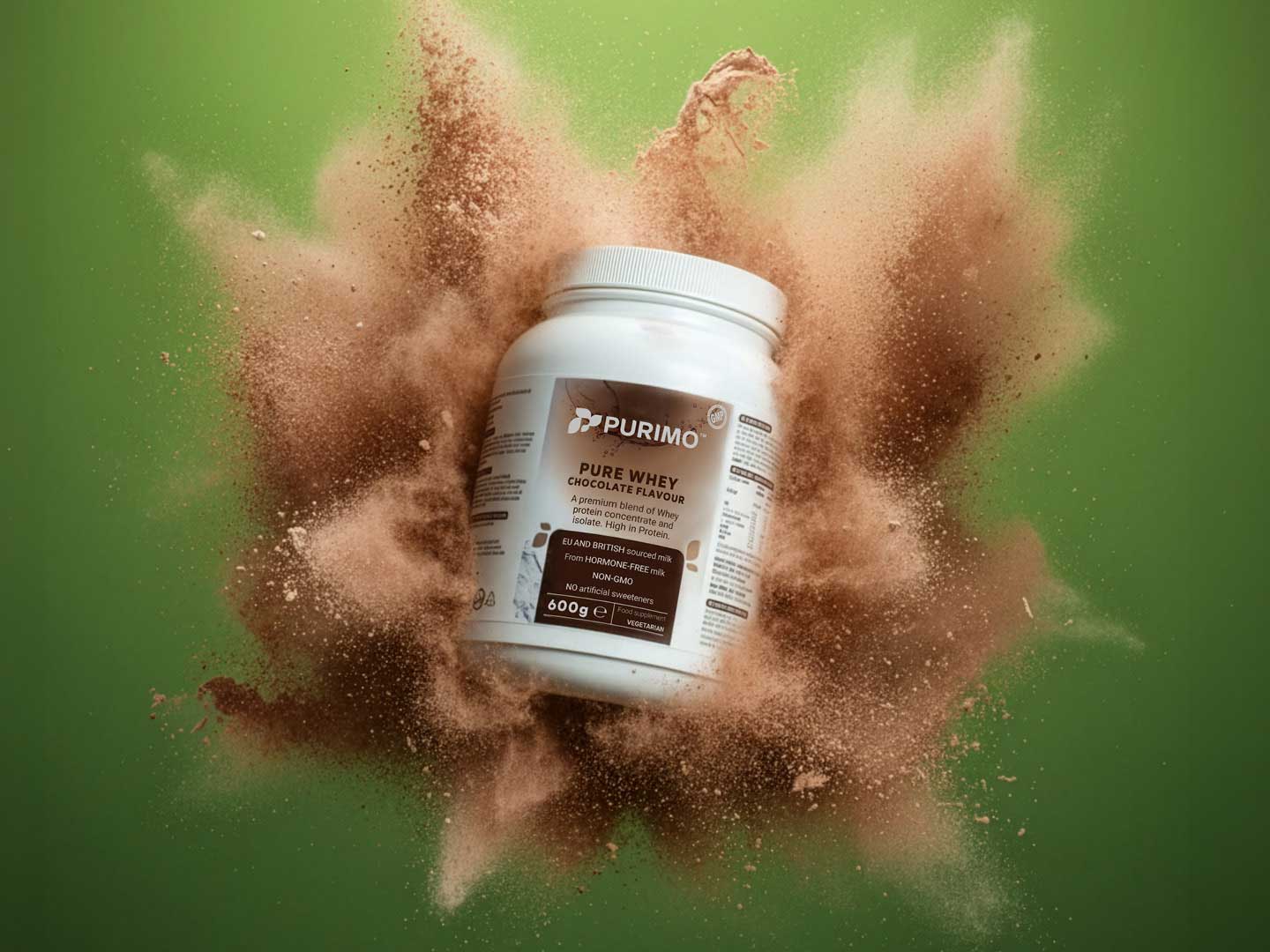
Purimo Pure Whey is a blend of whey protein concentrate and whey protein isolate, sourced exclusively from hormone-free, non-GMO EU and British cows. The isolate brings a high protein density and lower lactose content; the concentrate adds richness and beneficial bioactive compounds. Together, they deliver 22g of protein per 30g serving, a genuinely impressive ratio for those undergoing weight management or trying to build muscle.
There are no artificial sweeteners, colourings, or flavourings. Instead, Purimo uses stevia leaf extract for natural sweetness, the same plant-derived sweetener used in premium food products. Why use stevia? Well, for one, it’s a natural plant-derived sweetener and also has zero calories, so it’s great for people who are trying to maintain a healthy weight by counting calories. The result is a smooth, clean-tasting shake in vanilla or chocolate that you’ll actually look forward to.
The whey undergoes non-irradiated processing and carries a TSE/BSE-free guarantee that goes beyond what many brands bother to communicate. It’s also suitable for vegetarians and Halal approved, making it genuinely inclusive.
What Purimo pure whey delivers per 30g serving:
- 22g of high-quality protein
- Just 1g of sugar
- Only 1.4g of fat
- Naturally sweetened with stevia
- Hormone-free, non-GMO whey from EU & British farms
- Blended and packed in the United Kingdom
- Rated 5 stars by real customers
Purimo Pure Whey is a premium product at a genuinely accessible price. Clean nutrition shouldn’t require a second mortgage.
Who should exercise caution with protein shakes?
In the spirit of genuine honesty (because purity applies to information too), it’s worth noting that some groups should seek medical advice before starting any new supplement:
People with existing kidney or liver conditions should consult a doctor, as higher protein intake needs to be considered in their management. Pregnant or breastfeeding women should always check with a healthcare professional first. And anyone with a milk allergy (not just lactose intolerance) should opt for a plant-based alternative rather than whey.
For everyone else (healthy adults looking to support their training, manage their weight, or hit their daily protein targets more easily), the evidence is reassuring. Protein shakes, chosen wisely, are a safe and effective supplement.
The bottom line
Is there a downside to drinking protein shakes? Are protein shakes dangerous? For most healthy adults, moderate consumption of protein powder is generally safe. The main concerns about protein supplements arise from low-quality products containing artificial ingredients, overconsumption, or pre-existing medical conditions that necessitate professional guidance.
The real question isn’t whether protein powder is bad for you; it’s which protein powder you are using and how you are using it. Additionally, obtaining enough dietary protein can be challenging, especially for those who are training hard and aiming for a high-protein diet.
Choose a product with a clean, transparent ingredient list. Look for responsibly sourced whey. Avoid artificial sweeteners and hidden fillers. Take a sensible serving as part of a balanced diet. And if in doubt, consult your GP or a registered nutritionist.
Do that, and you’ll find that a high-quality protein shake is far less scary than the internet would have you believe, and quite possibly one of the most convenient additions to a healthy lifestyle you could make.
Looking to make other improvements to your health? Purimo has you covered. Our supplement shop is the cornucopia of health supplements containing what you need for improved sleep, better nutrition absorption, healthier skin and nails and much, much more.

Give Purimo whey a try?
Purimo Pure Whey is made in the UK, free from artificial nasties, no added sugar, and rated 5 stars by real customers. Chocolate or vanilla, both are genuinely delicious. Five-star rated supplements made in the UK. No unnecessary bulking agents, just effective results.